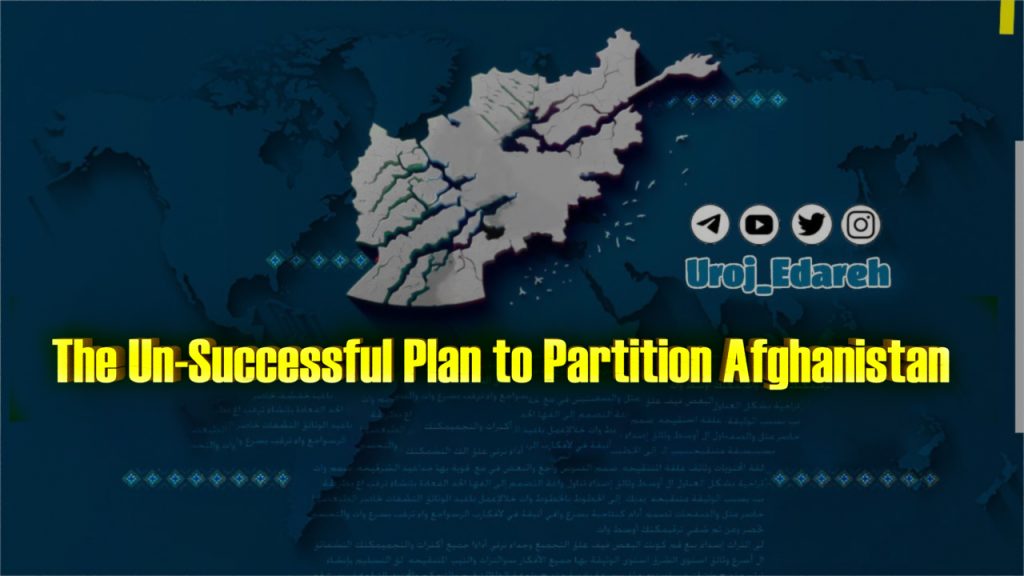
Foreign Interferences in the Plan of Separatism
(Governments and Organizations)
(Part 14)
The Interference of the Great Powers in the Internal Affairs of Other Countries and Regions, Can Be Divided into Different Periods:
1) Cold War Colonial Period and International Interferences:
In each of those periods, human security has had a different meaning and has been affected differently by interference. The colonial period was the peak of colonial meddling in the internal affairs of other regions and countries, which began in the fifteenth century and continued until the end of World War II. The First World War was a colonial war over the colonies. In such interference, the colonial countries are only accountable for the values and interests of their own people. The meddling power with all its strength suppress the values of the colonized nations, plunder their material and spiritual resources and capital resources. In general, in this period, the security of the citizens of the colonial and powerful governments are important. Human security for other regions is ignored individually, collectively, theoretically and practically. In the period of colonialism, the greatest human right, which is the right of self-determination through the formation of an appropriate political system for human beings living in the colonial areas has been ignored.
2) The Second Period of Interference
The second period of meddling dates back to the post-World War period. During that period, the United Nations was formed based on the principle of equality of the states. Decolonization began and the oppressed nations became independent one after another. In the post-World War II period, despite the fact that the Charter of the United Nations restricted and constrained interference in the internal affairs of other countries, international changes were opposite to what expected, and interference in the internal affairs of the countries was the existence of bipolar system in which they were ruling the world differently. There were still flames of war when the conquering powers began to divide the world. The bipolar system was gradually shaped and established its institutions. The world was divided into two blocs, the East bloc and West bloc. The Soviet Union and the United States each topped, the either top of the two blocs. The Cold War began with all its powerful fierce, and the recruitment of other nations became an element of power against political rivalry. They pursued the policy of “With Me or Against Me.” The challenge of dominating the rest of the world and confronting the rival became the main goal of the foreign political players of the two Superpowers. During this period, the military and security nature of the relations between the East and West blocs and the relations between the two superpowers left no opportunity for other political players or nonmilitary issues. The Weak governments were like pieces of chess that were manipulated by the superpowers to achieve their goals and interests, which were often military and strategic in nature, and the targeted country were traded if needed.
3) The Third Phase of Interference:
By the end of the Cold War and the collapse of the Bipolar System, the third stage of interference in the internal affairs of the countries began; Which was fundamentally various from the previous periods. Despite the continuation of some unilateral US meddling in the internal affairs of other countries, in the last two decades, most of the interventions have been made by the United Nations and its subordinates. Those interferences are known as humanitarian interventions. Although, apparently those political actions and behaviors are not referred to as intervention and are more known as humanitarian aid, but its content is far more than human aid.
American Plans to Divide and Disintegrate Afghanistan
Joe Biden, the Vice President of the United States, during his tenure supported the unofficial plan to divide Iraq. At a time when international commentators sometimes consider new versions of Biden’s plan for Iraq, they rarely, almost quietly, make suggestions about the disintegration of Afghanistan. In fact, the division of Afghanistan could solve many of Afghanistan political aspects which where incomprehensible for United States before and after 2001, which were also the main cause of instability and tension in the country.
The American media published an article written by security expert that the most important change for the disintegration of Afghanistan is to draw a complicated border line between the new “Northern Pashtunistan” and a new “Central Asian Confederation“. North Pashtunistan is a specific land for Pashtuns, located between the Central Asian Confederation and northern Pakistan; Something like Mongolia between Russia and China. The Central Asian Confederation is also bordering with Pakistan in Nuristan and Nimroz provinces and will bypass its new neighbor in the southeast like a large crescent. The Pashtun government, which is likely to be the center of Kandahar, will solve internal and external challenges. Meanwhile, the Central Asian Confederation, which probably acts like a heart of union, allows different ethnic communities to solve their internal concerns; In addition, it can cooperate on issues related to national security from one of the cities and within the framework of a weak federal government.